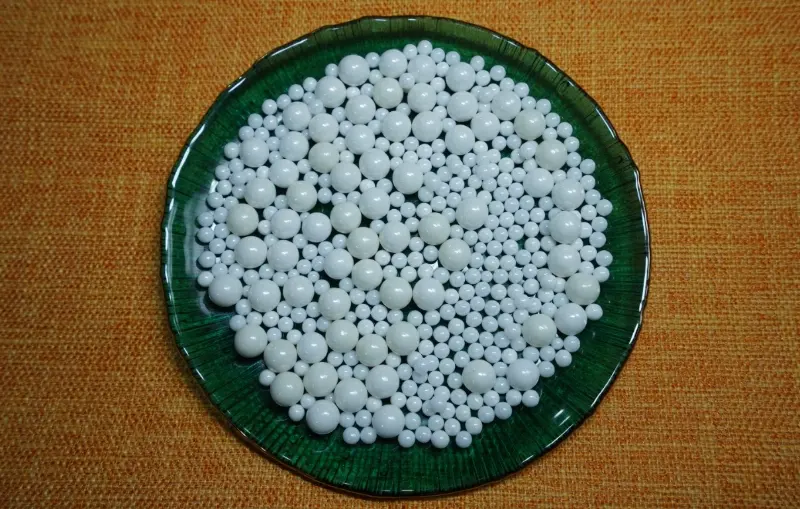
Zirconium Beads vs. Alumina Beads: Which Offers the Best ROI for High-Energy Milling?
Release time: 2026-04-03
Table of Contents
In the highly competitive landscape of material processing, the efficiency of your comminution process directly impacts your bottom line.
For industries relying on high-energy milling—such as battery materials, advanced ceramics, paints, inks, and pharmaceuticals—choosing the right grinding media is not just a technical detail; it is a critical financial decision.
When it comes to high-energy mills, the debate frequently narrows down to two primary contenders: zirconium beads and alumina beads. While alumina has long been the traditional choice due to its low initial cost, modern industrial demands are shifting the spotlight towards zirconium-based solutions. But which one truly offers the best Return on Investment (ROI)? Let’s break down the science, the performance, and the economics.
Understanding the Contenders
Before calculating the ROI, it is essential to understand the fundamental physical and chemical properties that differentiate these two types of grinding media.
Alumina Beads
Alumina (aluminum oxide) beads are widely used in standard milling operations. They are relatively lightweight (with a density typically ranging from 3.6 to 3.8 g/cm³) and are known for their hardness. Their primary advantage is their low upfront procurement cost, making them attractive for operations with tight initial budgets or low-energy dispersion tasks.
Zirconium Beads
Zirconium beads, on the other hand, are engineered for extreme environments. Depending on their specific stabilization process, their density ranges from 4.0 to over 6.0 g/cm³. This higher mass translates directly to higher kinetic energy upon impact. Furthermore, zirconium boasts exceptional fracture toughness, meaning it resists chipping and breaking under the immense stress of high-speed agitator bead mills.


Performance Metrics That Drive ROI
To determine true ROI, we must look beyond the purchase order and evaluate how the media performs inside the mill.
1. Grinding Efficiency and Kinetic Energy
In high-energy milling, the kinetic energy formula indicates that mass plays a crucial role. Because zirconium beads are significantly denser than alumina, they impart much more energy to the particles being milled at the same rotational speed. This results in faster particle size reduction and shorter batch times. For facilities running continuous operations, achieving the target particle size in 30% less time dramatically increases overall plant throughput.
2. Wear Rate and Lifespan
This is where the ROI of zirconium begins to sharply outpace alumina. Alumina beads, while hard, are relatively brittle. In a high-energy environment, they suffer from high wear rates and are prone to micro-fracturing.
Conversely, high-density zirconia grinding media utilizes a unique crystalline structure that provides superior fracture toughness. They wear down at a fraction of the rate of alumina. While you might replace an alumina charge several times a year, a high-quality zirconium charge can last significantly longer, drastically reducing media replacement costs over a 12-month period.
3. Product Contamination and Quality Control
When grinding media wears down, where does that material go? It ends up in your product. For industries like cosmetics, digital inks, or cathode materials for EV batteries, contamination is unacceptable. Alumina wear introduces aluminum and oxygen impurities, which can alter the color or conductive properties of the final product.
Using wear-resistant ceramic beads made of zirconium minimizes this risk. Because their wear rate is exceptionally low, product contamination is virtually eliminated, reducing the rate of rejected batches and safeguarding your brand’s reputation.
The Specialized World of Zirconium Media
Not all zirconium media is created equal. Advanced manufacturing allows for different formulations tailored to specific applications, further optimizing your ROI. By partnering with dedicated innovators like Zirconet, facilities can select the exact formulation needed for their specific slurry.
- Yttria stabilized zirconia beads: Widely considered the gold standard for high-energy milling, these beads offer the highest density (around 6.0 g/cm³) and unmatched wear resistance. They are the premier choice for zero-contamination nano-grinding.
- Cerium stabilized zirconia media: With a density of approximately 6.2 g/cm³, these are exceptionally heavy and excel in grinding high-viscosity materials. They offer a slightly different wear profile and are highly effective in specific paint and agrochemical applications.
- Zirconia micro milling beads: As industries push towards the nanoscale, the demand for microscopic media grows. These ultra-small beads (sometimes down to 0.05 mm) are essential for ultra-fine grinding applications, allowing for unprecedented surface area generation in advanced materials.
- Zirconium silicate grinding beads: For operations looking for a middle ground—better performance than alumina but a lower price point than pure yttria-stabilized options—these mid-density beads (around 4.0 g/cm³) offer an excellent transitional ROI.
Calculating the True ROI: The Long Game
If you only look at the invoice, Alumina Beads wins. They are undeniably cheaper per kilogram. However, high-energy milling is a long game.
Let’s look at the Total Cost of Ownership (TCO). When you choose Zirconium Beads, your initial capital expenditure is higher. But over a year of operation, you must factor in:
- Energy Consumption: Faster grinding means mills run for fewer hours to achieve the same output, saving electricity.
- Downtime: Every time a mill is stopped to clean out broken alumina beads and top up the charge, you lose valuable production time. Zirconium’s durability ensures mills stay online longer.
- Media Replenishment: You will buy far fewer kilograms of zirconium over a year compared to alumina due to the drastically lower wear rate.
- Yield Quality: Fewer rejected batches due to contamination directly improves profitability.
When these factors are combined, operations that upgrade to high-quality zirconium beads typically see a positive ROI within the first 6 to 9 months, after which the savings drop straight to the bottom line.
Conclusion
For low-energy dispersion of non-sensitive materials, alumina remains a viable option. However, for high-energy milling where efficiency, purity, and uptime are critical, zirconium beads are the undisputed champion. The initial investment is outweighed by the massive gains in productivity and the reduction in operational headaches. By sourcing your media from established experts like Zirconet, you guarantee that the beads driving your process are engineered for maximum endurance and the highest possible return on investment.
Frequently Asked Questions (FAQs)
Q1: How do I know if my current milling equipment is suitable for heavy zirconium beads?
Most modern high-energy agitator bead mills are designed to handle high-density media. However, because yttria-stabilized zirconia beads are much heavier than alumina, they require more power to agitate. You should check your mill’s motor capacity and ensure the screen/separator size is appropriate for the specific bead diameter you intend to use. Consulting with your mill manufacturer or your media supplier is highly recommended before making the switch.
Q2: Can I mix alumina and zirconium beads in the same mill to save money?
No, this is highly discouraged. Mixing media of vastly different densities and hardness levels will cause severe internal wear. The heavier, harder zirconium beads will rapidly crush and pulverize the softer alumina beads, leading to massive product contamination, clogged separator screens, and potential damage to the mill’s internal components.
Q3: What is the typical size of media used for nano-grinding applications?
For achieving nanometer-scale particle sizes, traditional large beads are ineffective. Instead, operators utilize zirconia micro-milling beads. Typically, media ranging from 0.05 mm to 0.3 mm is used for ultra-fine grinding applications. The rule of thumb is that your grinding media should be roughly 10 to 1000 times larger than your target final particle size, depending on the material’s initial starting size and viscosity.